
No alcohol

Permanent makeup
Enhance your features with permanent makeup
The idea behind permanent makeup is to enhance your own facial features using a safe and hygienic method. Permanent makeup makes everyday life easier and speeds up your daily makeup routine. It is also a great solution for situations where you can’t wear makeup – during exercise, for example – but still want to look polished and well put-together. If you find applying makeup a hassle, or can’t wear makeup because of allergies, permanent makeup is an excellent alternative. The technique can also be used to correct asymmetries in your features. Permanent makeup is not permanent like a tattoo; it gradually fades over approximately 1–4 years.
Permanent makeup is usually applied to the brows and to the eye and lip lines, following your own facial features and colouring. Shades and shapes are always discussed with the client in advance, and the client approves the plan before pigmentation begins. The result is naturally beautiful.
Before the treatment, a numbing product is applied to the area according to individual needs, but you may still feel some pinching and tickling. Permanent makeup is done with colour pigment and lasts in the skin for 1–4 years depending on skin type. It generally lasts longer on dry skin than on oily skin. Permanent makeup is not placed as deep as a regular tattoo – the colour is deposited only in the upper layers of the skin. We use single-use sterilised needles and pigments made specifically for them. Two sessions are always needed for a good, longer-lasting result (included in the price).
Frequently asked questions
Ombré brows
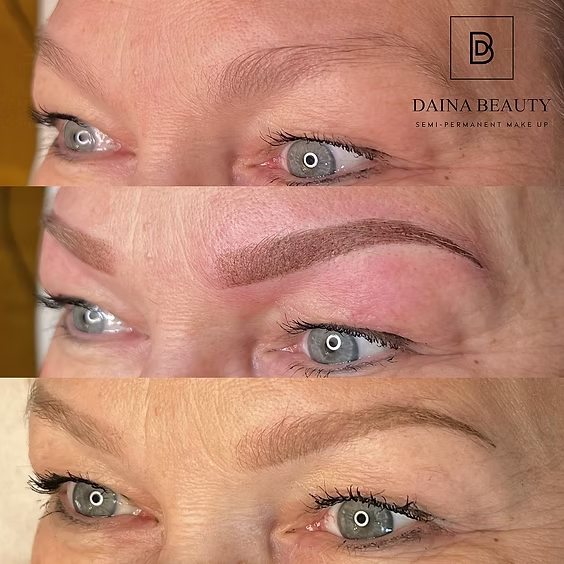
The ombré technique is the newest and most advanced machine pigmentation method for eyebrows. The name ombré refers to the fading, shaded effect: the front of the brow is pigmented softly and lightly, and the shade deepens towards the tail. Powdery ombré brows can be created to look soft and natural or to resemble a more defined, made-up brow. The strength of the ombré effect depends on how many natural brow hairs you have, so the result varies from person to person. If you have dark brows or gaps in your brows, you will probably need a fuller ombré fill so that your own brow hairs blend seamlessly with the pigmentation. The ombré technique is ideal for all skin types, especially for clients with existing permanent makeup, oily skin, mature skin or acne-prone skin.
Lip blush
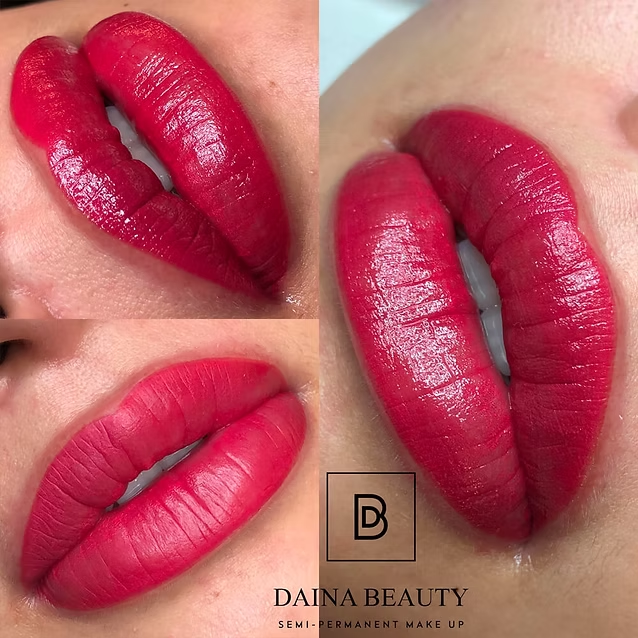
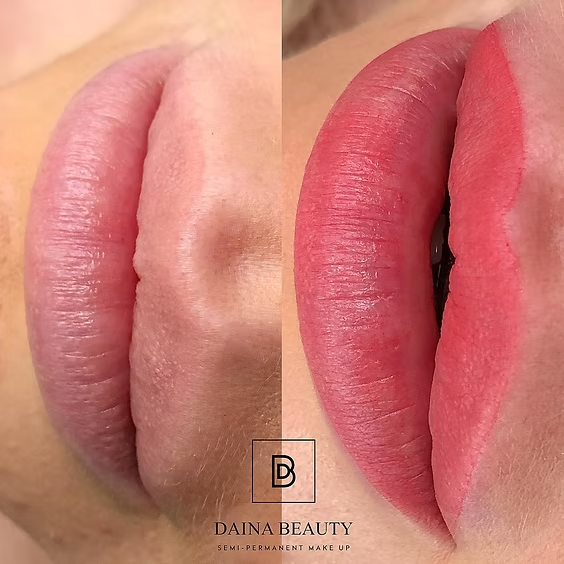
Lip blush is a semi-permanent cosmetic treatment that adds a natural tint to the lips and enhances their shape. Pigmentation does not add volume, but it can make the lips look fuller and improve asymmetry.
Benefits of lip blush
A more defined lip line – Pigmentation brings out the natural shape of your lips and sharpens the lip line.
A soft tint – Your lips get a natural shade that won’t smudge like traditional lip makeup.
Corrects asymmetry – The treatment can help balance the shape of your lips.
Long-lasting – The pigmentation stays put through everyday life, work, sport and swimming, with no need for lip makeup.
Non-drying – Unlike some lip products, pigmentation does not dry out the skin of the lips.
Who is lip blush suitable for?
Lip blush is suitable for anyone who wants to subtly enhance their lips without wearing lip makeup every day. It can also be a good option for people with uneven lip pigment or a natural lip line that has faded.
Things to consider before the treatment
Keep your lips well moisturised before the treatment to ensure an even result.
If you are prone to cold sores, starting preventive medication may be advisable.
Avoid lip makeup straight after the treatment so the pigment has time to settle properly.
Lip blush fades over time and how long it lasts varies from person to person. If needed, the colour can be refreshed with a touch-up every few years.
Permanent eyeliner
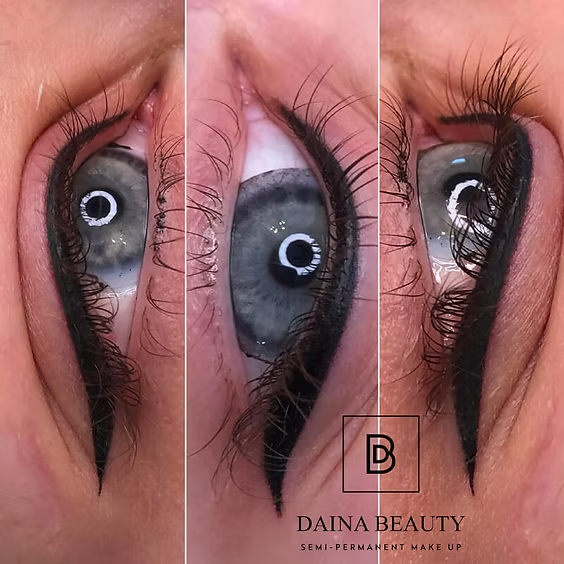
Permanent eyeliner removes the need to apply eyeliner every day and adds depth to your eyes. The treatment uses a technique in which colour is deposited into the skin with a pigmentation machine. The pigment is applied precisely along the lash line, creating a natural, long-lasting eyeliner.
Permanent makeup is carried out with a pigmentation machine that drives a fine needle into the surface layer of the skin. It is a long-lasting treatment, but the pigments fade over time. For eyeliner we use special pigments designed for cosmetic tattooing, which usually fade within 1–4 years. If needed, the liner can be refreshed with touch-up appointments.
What should you avoid before the treatment?
To get the best possible result from your permanent makeup and ensure smooth healing, it is important to follow a few preparation guidelines:
Lash serum: Stop using lash serum at least 2–4 weeks before the treatment, as it can increase skin sensitivity and affect how well the pigment takes.
Substances that increase bleeding: Avoid aspirin, ibuprofen, omega-3 fatty acids, vitamin E and other blood thinners for about 3–5 days before the treatment, unless your doctor advises otherwise.
Coffee and caffeinated drinks: Caffeine can increase skin sensitivity and cause bleeding during the treatment, so avoid coffee and other caffeinated drinks for 3–4 hours beforehand on the day of the treatment.
Alcohol: Alcohol thins the blood and can increase the risk of bleeding, so avoid alcohol for at least 24 hours before permanent makeup.
Sun and sunbeds: Avoid sunbathing and sunbeds for at least a week before the treatment, as sunburnt or irritated skin is not ideal for pigmentation.
Cosmetic treatments: Avoid chemical peels, acid treatments and intensive facials for at least two weeks before pigmentation.
Eyelash extensions: Permanent eyeliner cannot be done if you are wearing eyelash extensions. We recommend booking your permanent makeup appointment only after you have had a break from extensions for at least 1 week.
Careful preparation helps ensure a beautiful, long-lasting result.
Before the treatment
24 hours before the treatment:
Avoid for 14 days before the treatment:
Contraindications for permanent makeup
Permanent makeup is not suitable for everyone, and certain health or skin conditions may prevent the treatment. You should not have permanent makeup if any of the following apply:
Pregnancy
Diabetes (except with your doctor’s approval)
You are taking blood-thinning medication
You are on a course of Roaccutane (pigmentation can be done 6 months after finishing the course).
You have a bleeding disorder
You have a skin condition, a tendency to keloid scarring, a rash or an unhealed wound.
You have HIV or hepatitis
Tuberculosis
A course of antibiotics (2 weeks after finishing)
Cancer (at least 6 months must have passed since radiotherapy)
Flu (2 weeks)
COVID-19 (2 weeks)
Laser treatment (2–3 months)
We do not perform pigmentation on anyone UNDER 18 – 18+ only!
Please contact me in advance if you have:
- Problematic skin type
- Old permanent makeup
- Serious health conditions
- A course of medication, antibiotics or other medication
Permanent makeup aftercare instructions
Caring for your permanent makeup at home is important. Following these instructions helps your skin heal faster, avoids possible infections and ensures the final colour turns out as intended.
- For about a week, the pigmentation will look 50%–70% darker, after which the excess colour flakes off along with dead skin cells.
- While the skin is healing, avoid saunas, long hot showers and sweating. Avoid wearing makeup on the treated areas as well. The skin should be left alone as much as possible. Itching is a normal part of the healing process.
- Scratching is FORBIDDEN! The pigment comes away with the scabs and the result may become patchy and uneven. So please don’t scratch or pick at the scabs!
- After brow pigmentation, keep an eye on the skin for the rest of the day to see whether it starts to “sweat” (lymph fluid seeping onto the surface). If small droplets appear, gently wipe them away with a clean, damp cotton pad. If the skin is already dry when you leave and looks dry at home (matte rather than shiny), no further action is needed.
- On the first day, wipe the area with PhiBrows wipes every 2–3 hours and, if needed, apply a thin layer of the balm I give you 1–3 times a day. Keep an eye on how your brows/eyeliner/lips feel – are they dry or tight? If not, there’s no need to apply balm!
- Eyeliner pigmentation causes more visible swelling than other areas, lasting one to two days. Minor bruising and styes are also possible. I recommend not getting the area wet for a couple of days. After that you can wash normally, but be careful when drying with a towel. No eye makeup while scabs are still visible. Apply balm on the third day if needed.
- For lip blush, we recommend taking a day off work. Lip pigmentation can trigger cold sores in those prone to them. If symptoms appear, apply a cold sore cream immediately. If you are very prone to cold sores, it is worth taking a preventive course of oral antiviral medication (prescription only). Even so, it does not offer 100% protection.
After pigmentation:
The treated areas can be protected with sunscreen if needed.
Do not scratch or pick at the flaking skin that appears after pigmentation.
Book your appointment
Book your treatment and take the first step towards quicker mornings, effortless make-up, the features of your dreams and a lovely moment of pampering.